
Firewater containment requirements in the UK
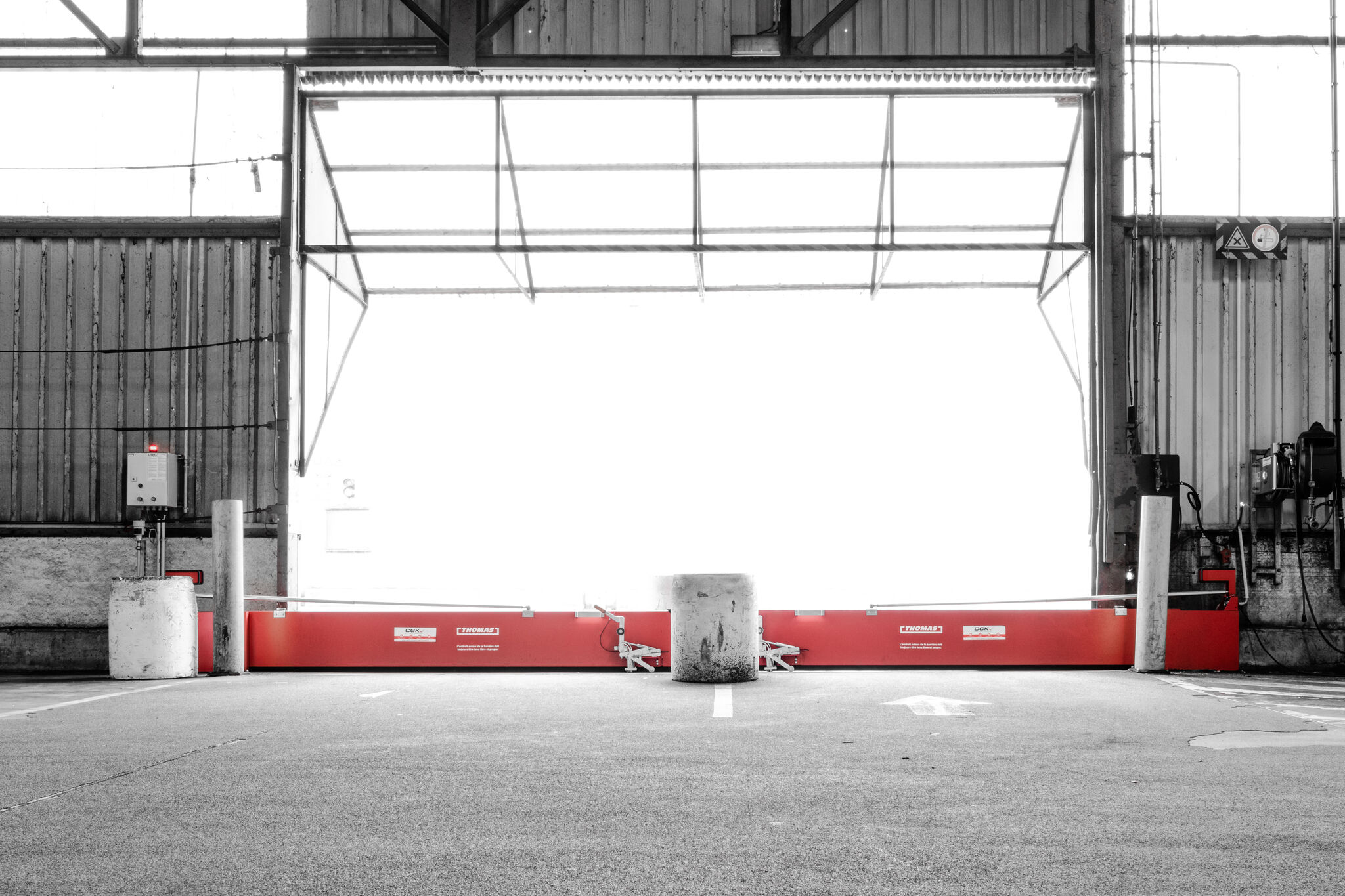
For industrial sites, this means assessing how firewater or spilled liquids could leave the site and putting suitable containment measures in place. Common firewater containment measures include:
- containment barriers
- isolated drainage systems
- shut-off valves and penstocks
- bunded areas
- firewater storage tanks
- containment lagoons
- sacrificial areas
UK legislation, guidance and technical best practice
Firewater containment requirements in the UK are shaped by a combination of national legislation, regional regulation, environmental permits, regulator guidance and technical best practice.
COMAH
At UK level, COMAH, the Control of Major Accident Hazards Regulations, applies to sites that store or handle larger quantities of dangerous substances. COMAH requires operators to identify major accident risks and take suitable measures to prevent accidents and limit their consequences for people and the environment.
For pollution prevention and firewater containment, several recognised guidance documents are commonly used:
GPP18
GPP18 provides practical guidance on containing major spillages and firewater at industrial sites. It covers containment planning, drainage isolation, containment capacity, worst-case scenarios and the use of primary containment, secondary containment and tertiary containment measures.
GPP18 is particularly relevant for Scotland and Northern Ireland. In England and Wales, operators should also check the applicable Environment Agency or Natural Resources Wales requirements, environmental permit conditions and site-specific regulator expectations.
CIRIA C736
CIRIA C736, Containment systems for the prevention of pollution, is an important technical reference for designing secondary containment and tertiary containment systems. It provides guidance on how containment systems should be assessed, designed, sized, tested and maintained to help prevent water pollution from industrial incidents.
Environment Agency Fire Prevention Plans
Environment Agency Fire Prevention Plans apply to certain permitted waste sites in England. These plans include specific requirements for reducing fire risk and managing firewater containment where combustible waste is stored. In Wales, Scotland and Northern Ireland, similar requirements may apply through the relevant environmental regulators and permit conditions.
Useful references
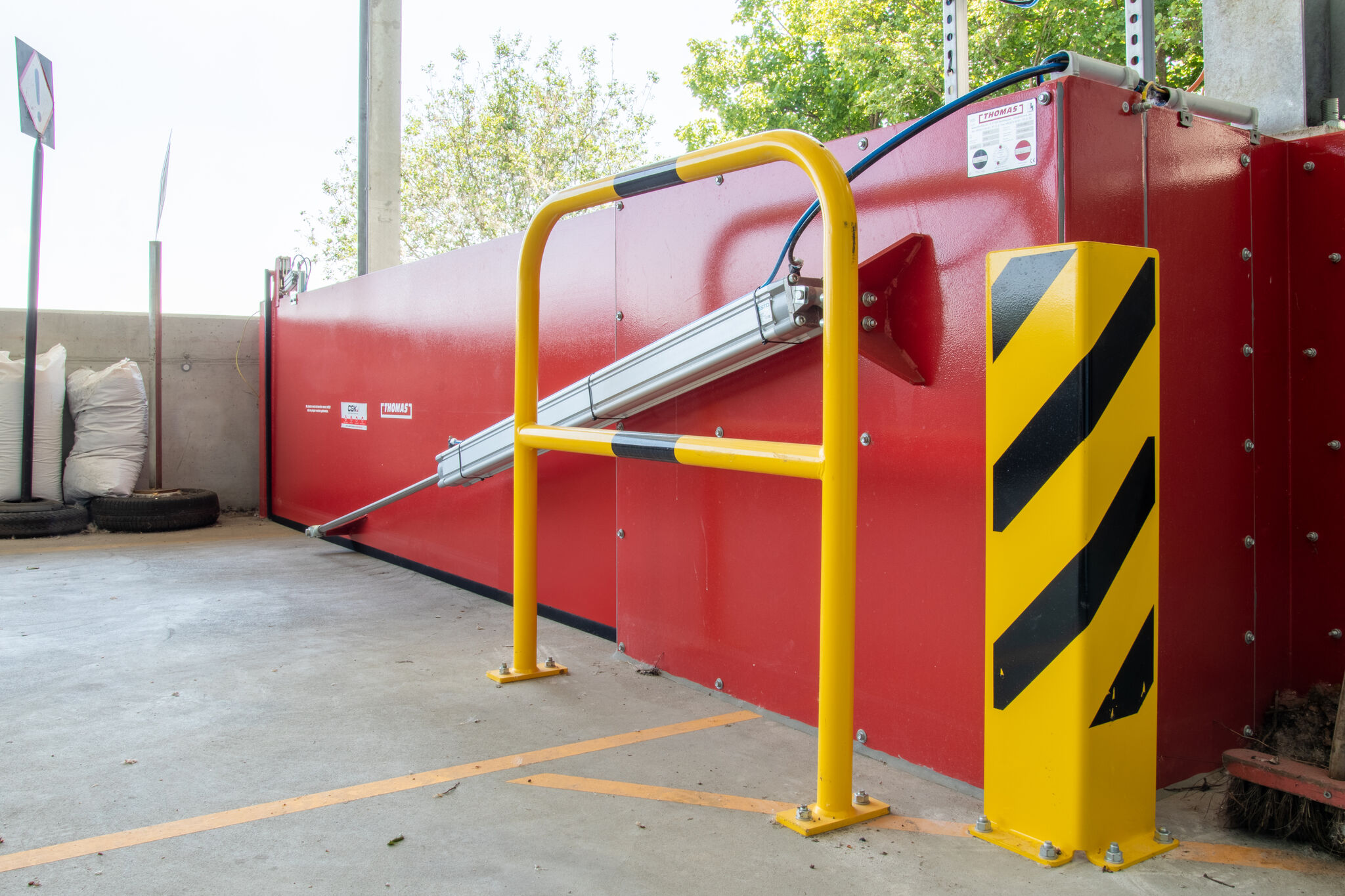
Firewater containment barriers for industrial sites
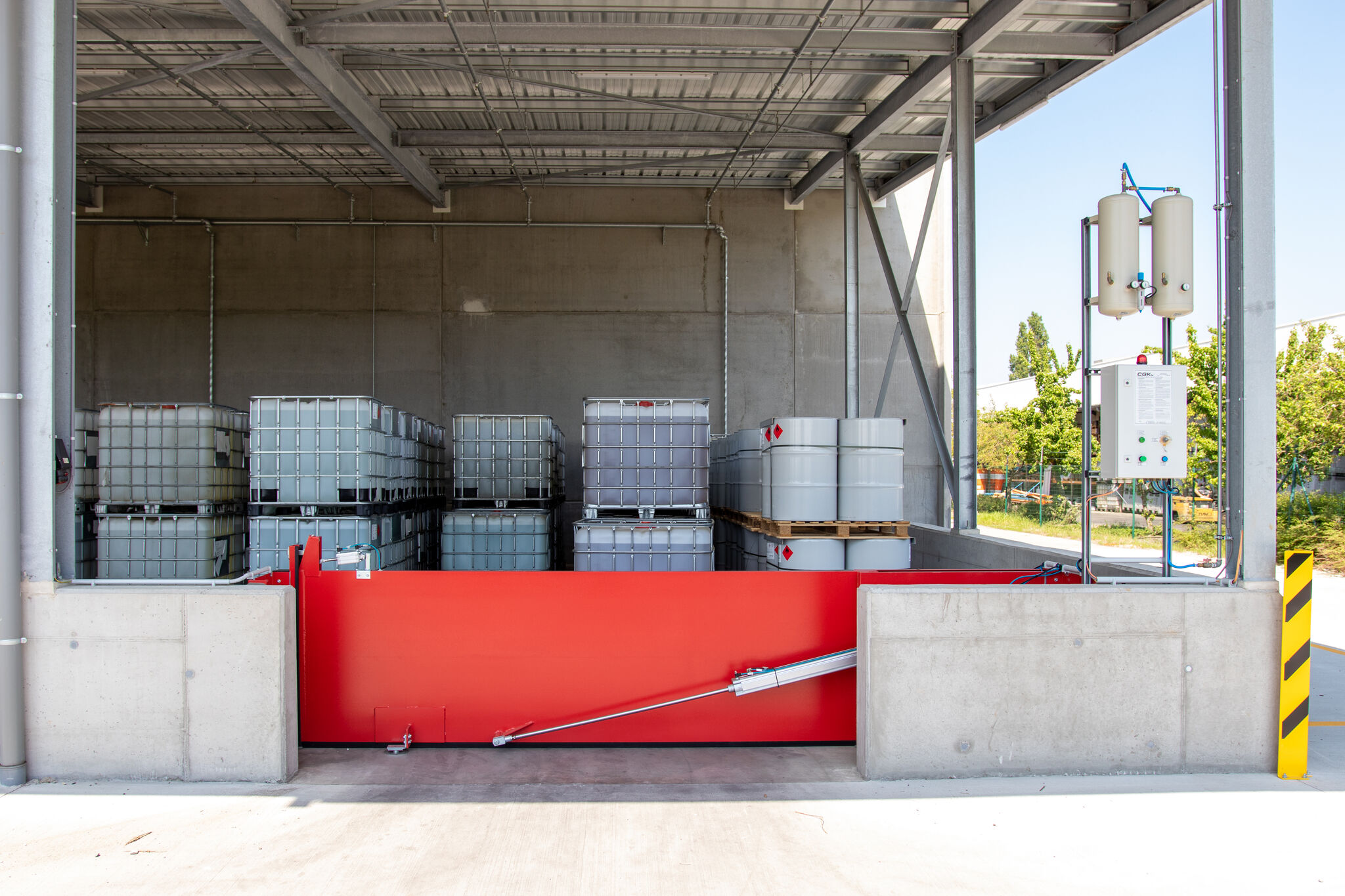
Containment barriers can help industrial sites capture and retain contaminated firewater and chemical spillages at critical escape routes, such as doorways, gate openings, loading bays and warehouse entrances.
Typical uses of containment barriers
Containment barriers can be used to:
- stop contaminated firewater from spreading through a building;
- create liquid-tight compartments inside warehouses or production areas;
- protect doorways, loading bays and gate openings;
- increase on-site containment capacity;
- support secondary or tertiary containment strategies;
- help prevent liquids from reaching drains, sewers, watercourses or external yard areas.
When are containment barriers a practical firewater containment solution?
A practical alternative to civil containment systems
Traditional firewater containment strategies often combine site-specific measures such as penstock valves, shut-off valves, firewater storage tanks, lagoons, bunded yards or sacrificial areas. These systems can be highly effective, but depending on the site layout, they may require drainage modifications, civil works, available outdoor space or detailed engineering design.
Capture firewater close to the sources
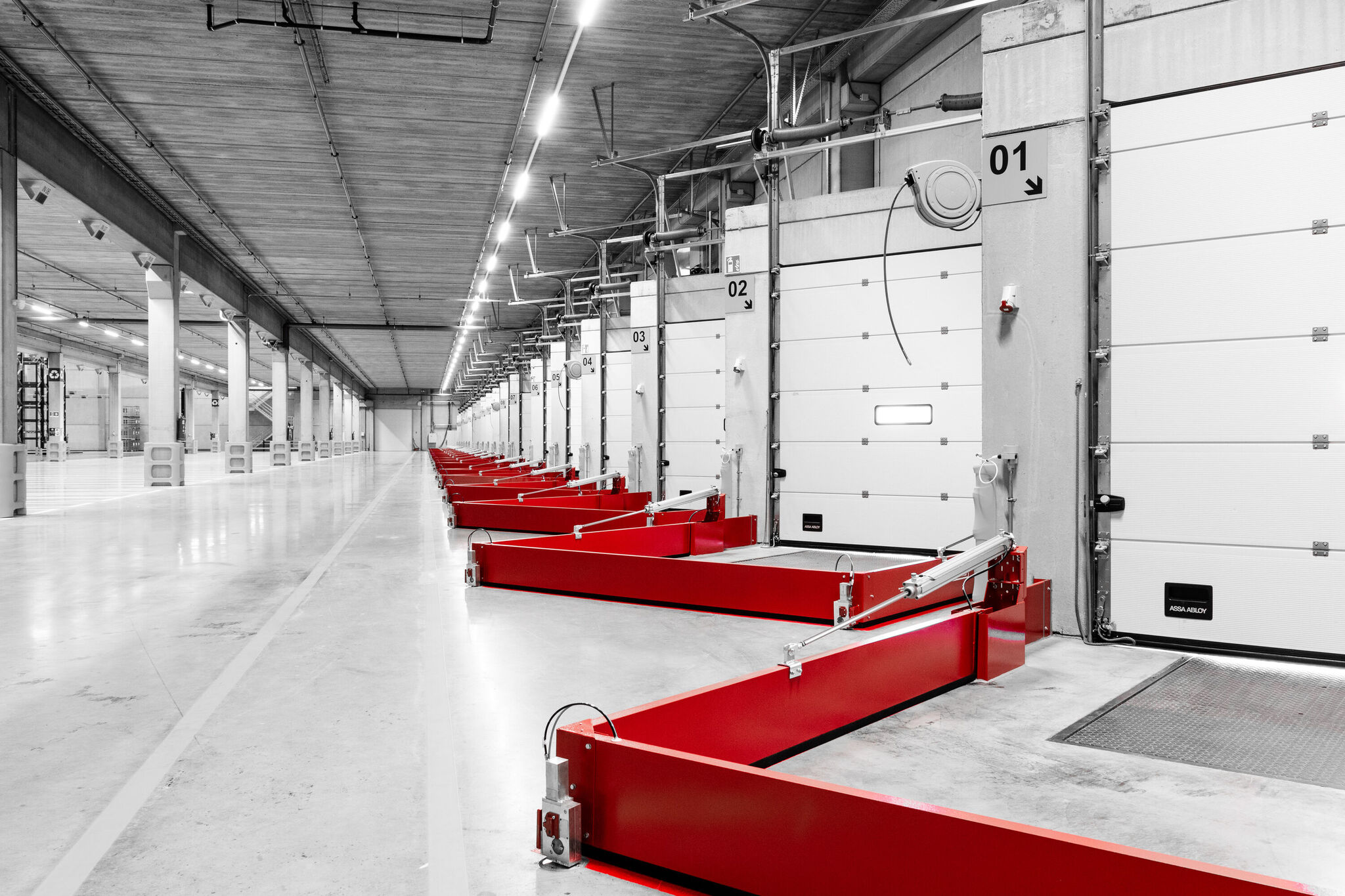
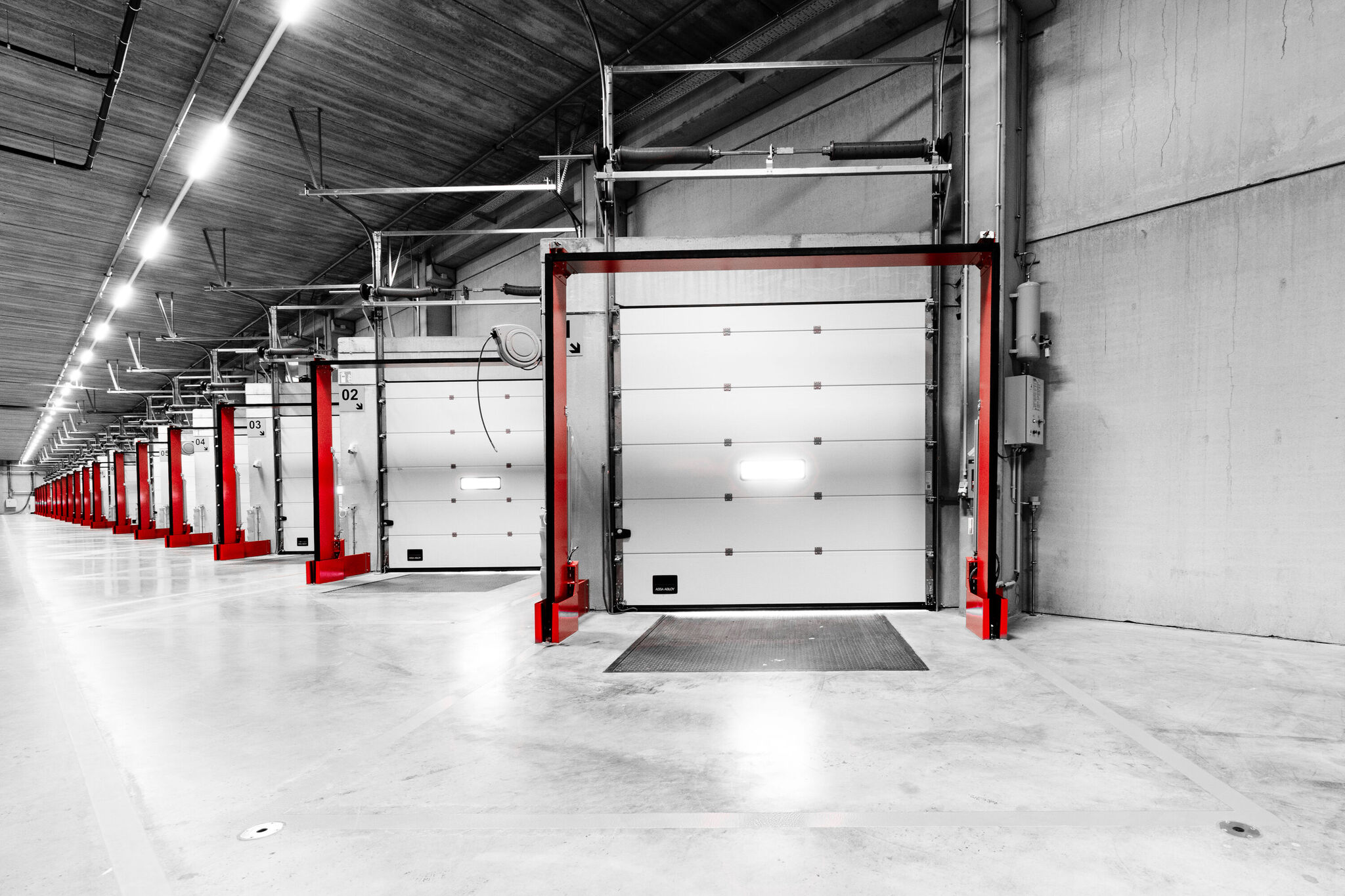
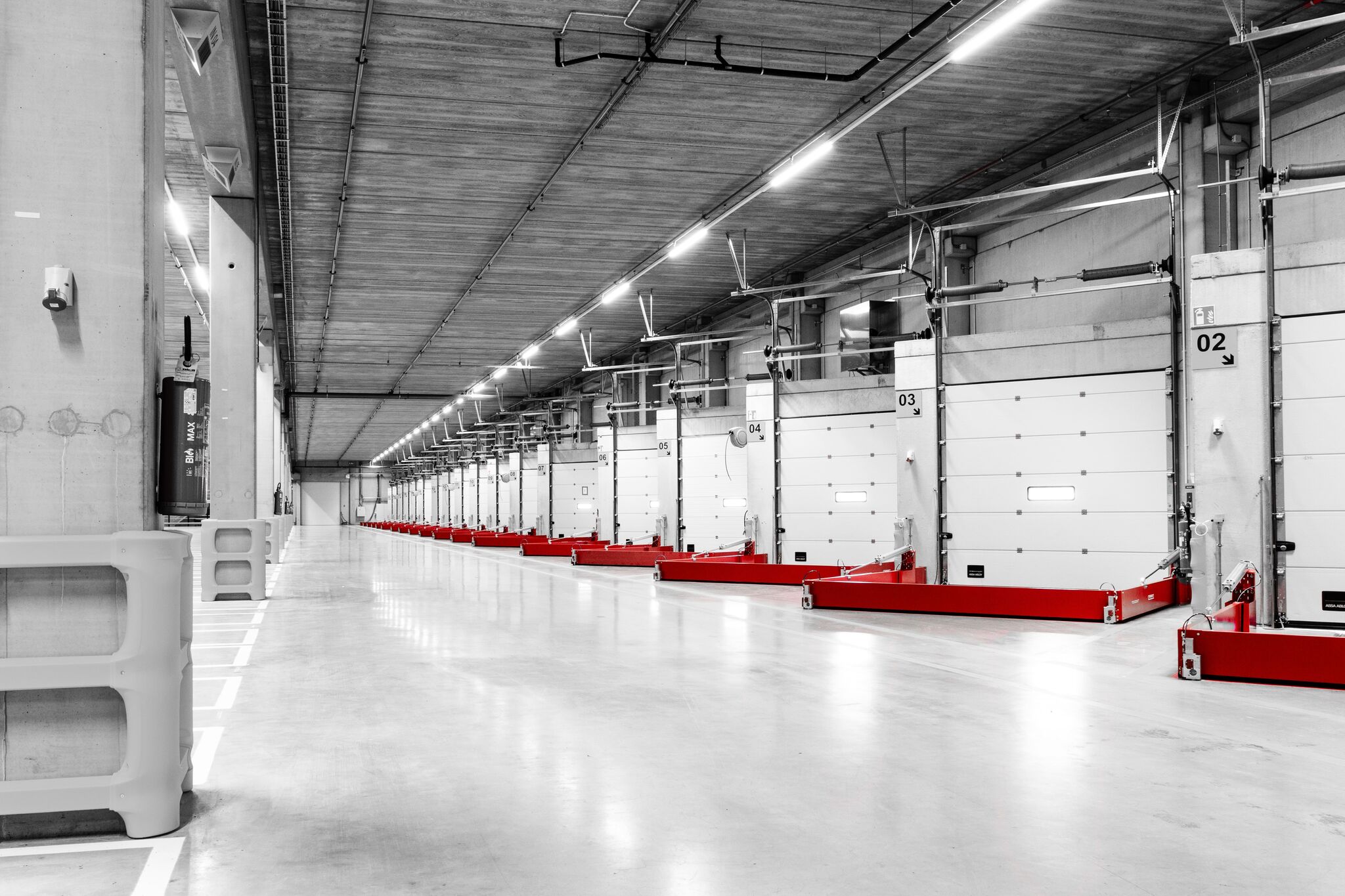
Containment barriers offer a practical alternative or complementary solution. They can be installed at critical escape routes such as doorways, gate openings, loading bays and warehouse entrances, helping to create liquid-tight compartments within the building itself. This allows contaminated firewater and chemical spillages to be captured close to the source, before they reach drains, sewers, watercourses or external areas.
Modular, compact and easy to integrate
Containment barriers are modular, compact and easy to integrate into existing industrial buildings. Automatic, semi-automatic, manual and fixed barriers can be selected according to the site layout, operational requirements and available utilities. Automatic containment barriers can be connected to a fire alarm control panel, liquid detection system or emergency button, allowing them to close when an incident occurs. Manual and fixed containment barriers can be used where permanent or manually operated liquid-tight separation is required.
Part of a wider containment strategy
Containment barriers can also be combined with penstocks, shut-off valves, tanks, lagoons or drainage isolation systems as part of a wider firewater containment strategy.

Industrial sectors where firewater containment may be required
Containment barriers are particularly relevant for industrial sites where hazardous substances, combustible materials or environmentally sensitive products are stored or handled. This may include:
- battery energy storage systems and lithium storage facilities
- logistics centres with ADR goods
- plastics storage and production sites
- chemical warehouses
- waste and recycling facilities
- pharmaceutical sites
- COMAH-regulated sites
Why choose CGK Group?
CGK Group combines technical expertise with more than 30 years of experience in containment barriers. Over the years, we have supplied and installed thousands of barrier systems worldwide, helping industrial sites protect people, infrastructure and the environment.
Our team can support you from the first assessment through to engineering, installation and after-sales service. Based on your site layout, stored materials and firewater containment requirements, we help select a practical and reliable solution for your specific situation.
Discover our containment barrier cases
- Semi-automatic containment barriers for new warehouse (CorroPaint)
- Firewater containment barriers with liquid-tight L-barrier (SNL Lidl)
- Installation of containment barriers (Brenntag)
- Containment barriers for risk zone (Schenker)
- Firewater collection (Janssen Pharmaceutica)
- Loading bay and semi-automatic barriers in warehouse (Eutraco)
- Firewater collection (Cummins - Rumst)
- Extinguishing water collection storage essential oils (Fairoils - Ghislenghien)
- firewater collection for storage warehouse with adhesives and silicone (Bison)
Request a firewater containment solution
Need advice on firewater containment requirements for your site? Fill in the form below and our team will contact you to discuss your situation, review the possible risks and recommend a suitable firewater containment solution.
Frequently asked questions: Firewater containment requirements in the UK
Firewater containment is the capture and retention of contaminated fire-fighting water during a fire or major spillage. The aim is to prevent polluted water from entering drains, sewers, watercourses, groundwater or soil.
Commonly used guidance includes GPP18 for major spillages and firewater, CIRIA C736 for containment system design and Environment Agency Fire Prevention Plans for certain permitted waste sites.
Firewater containment may be relevant for sites storing or handling hazardous substances, combustible materials or environmentally sensitive products. This includes chemical warehouses, logistics centres, waste facilities, plastics storage, pharmaceutical sites, BESS facilities and COMAH-regulated sites.
Primary containment is the first level of protection. It prevents hazardous substances from escaping from their normal storage or process equipment, for example double-walled tanks, drums, IBCs or pipework.
Secondary containment is used if primary containment fails. It captures leaks or spillages close to the source, for example with bunds, drip trays, sump pallets, local containment areas or containment barriers around storage zones. In some cases, shut-off valves or penstocks can also be used to isolate part of the site drainage system.
Tertiary containment is designed for larger incidents, including major spillages and contaminated firewater from fire-fighting activities. Examples include isolated drainage systems, penstocks before discharge points, firewater storage tanks, containment lagoons, bunded yards, sacrificial areas such as car parks or loading bays, and containment barriers at doorways, warehouse entrances or site boundaries.