
Gas Scrubbers: Operation, Applications & Regulations
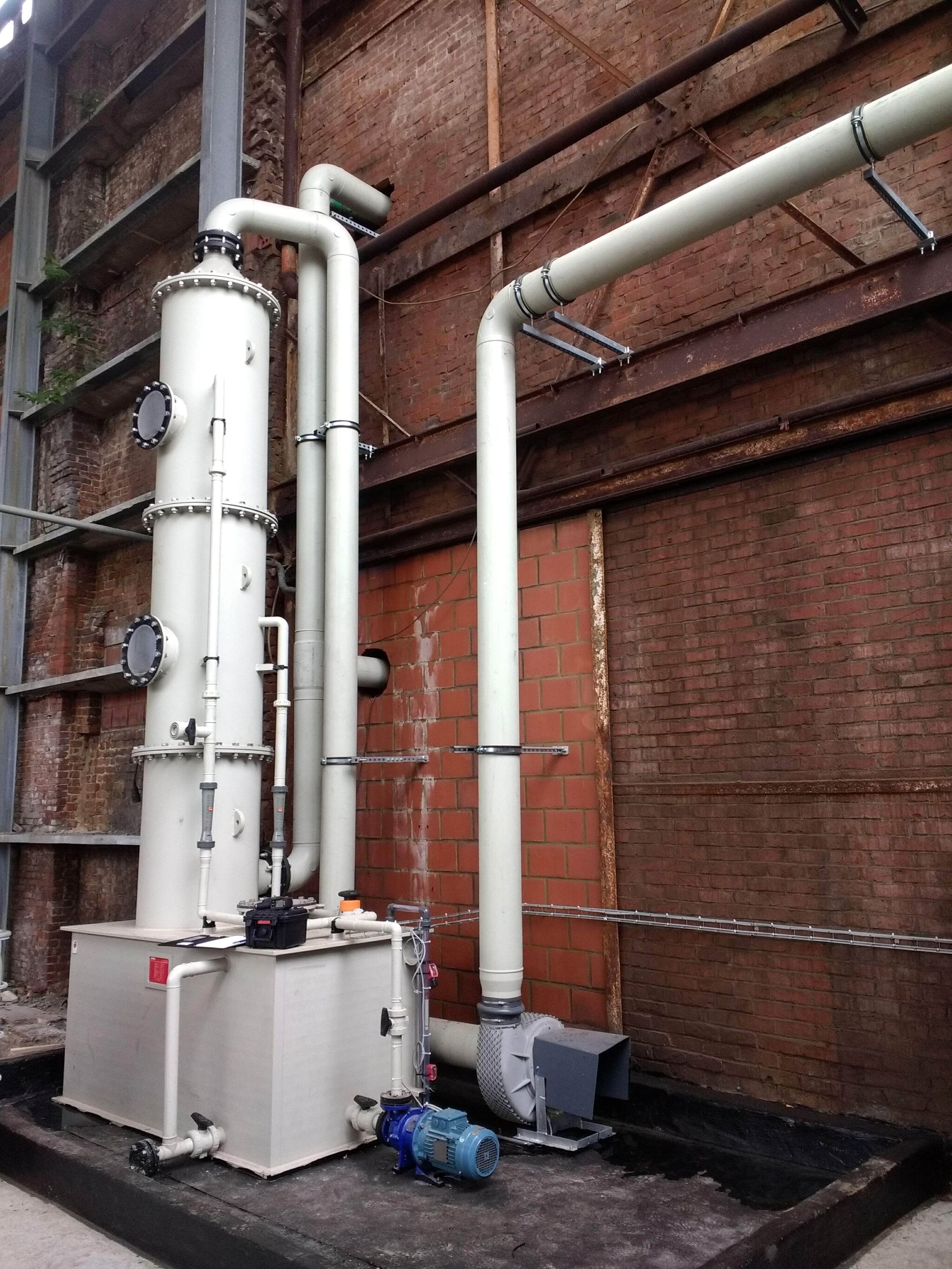
An industrial gas scrubber, also known as a scrubber or wet scrubber , is a purification system that removes undesirable substances from an air or gas stream by bringing it into intensive contact with a scrubbing liquid.
During this gas scrubbing process, harmful, corrosive, or odorous components are absorbed from the gas phase into the liquid. This process is called absorption .
Gas scrubbers can be used for applications such as tank venting, process air treatment, odor control, and complex industrial emissions.
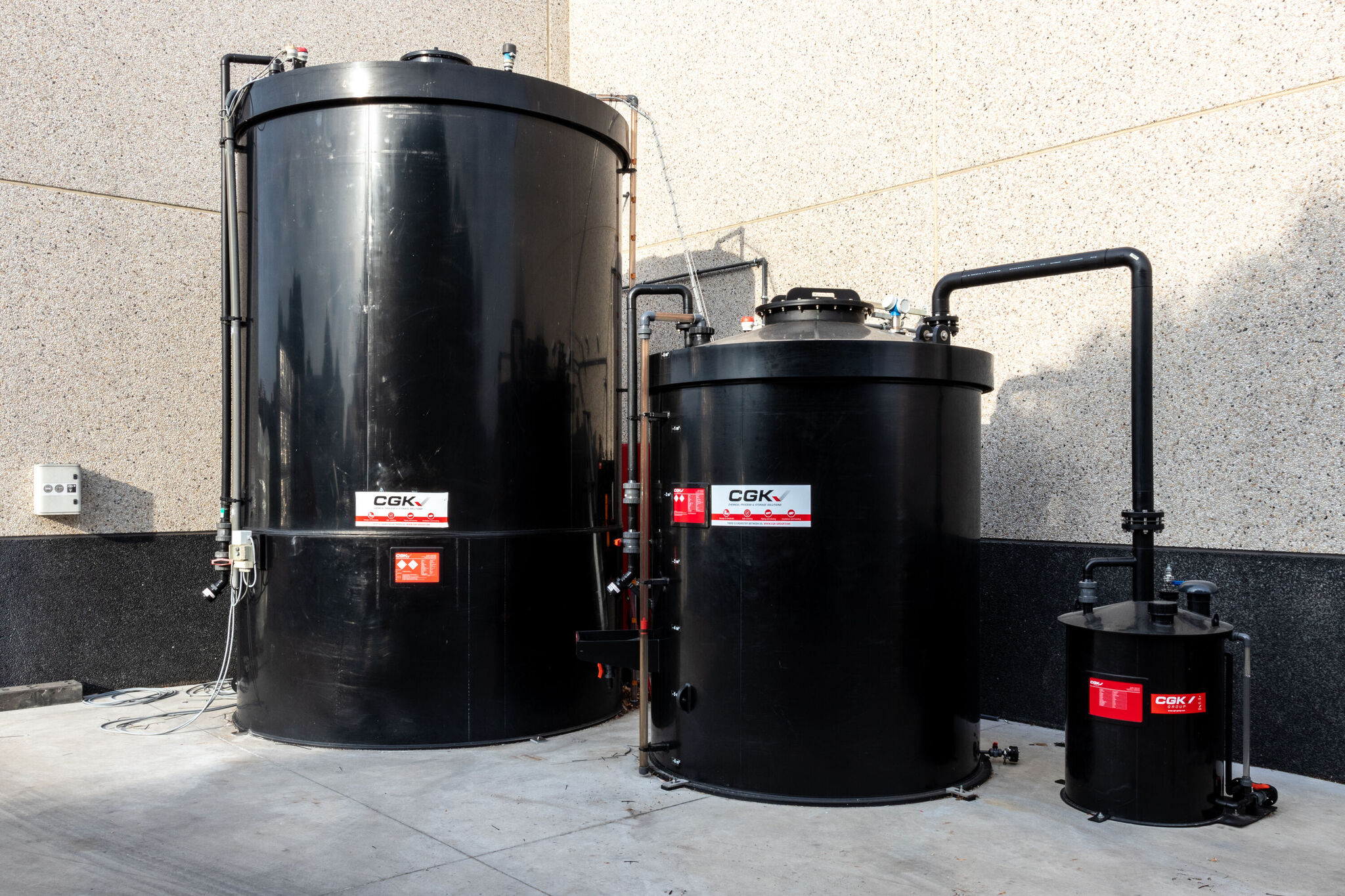
Contaminants in Industrial Gas Streams
Gas scrubbers can treat a wide range of gaseous contaminants, vapors, odor components, and, in certain models, dust particles as well.
Gaseous contaminants
- Acidic gases and vapors, such as HCl, HF, HNO₃, SO₂, and other organic or inorganic acids
- Basic gases and vapors, such as ammonia (NH₃) and amines
- Sulfur compounds, such as hydrogen sulfide (H₂S)
- Halogen-containing compounds, such as chlorine (Cl₂)
- Nitrogen oxides (NOx)
- Organic compounds and VOCs, including alcohols, ketones, aldehydes, acrylates, acetates, aromatic compounds, and hydrocarbons
- Other odor-causing gas and vapor components
Dust and particles
- Dust-laden air, in models suitable for wet dust removal
Complex gas streams
- Combinations of multiple contaminants, potentially treated in separate washing stages
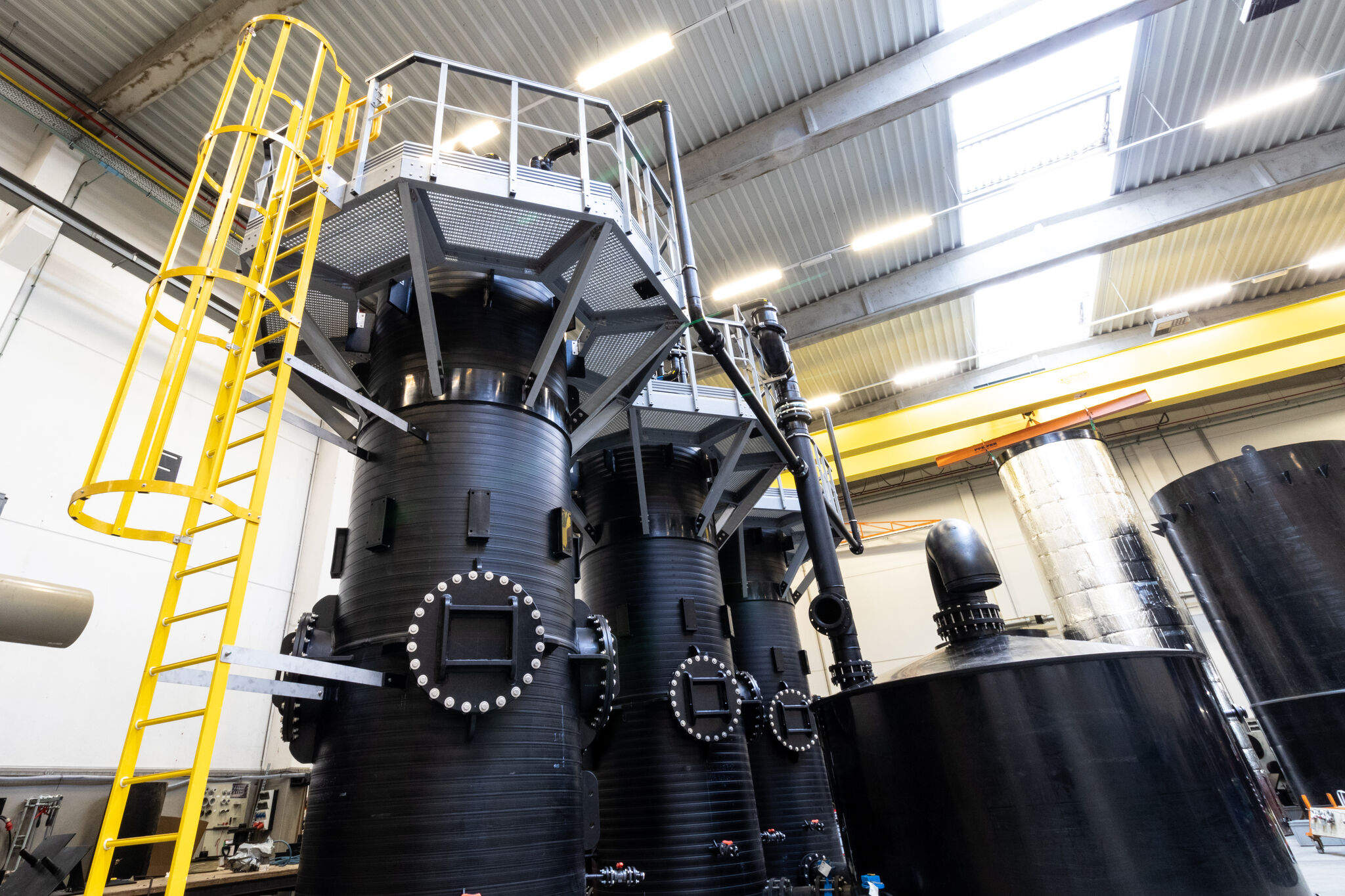
Gas scrubbers for a wide range of industrial sectors
- Chemical industry
- Waste incineration plants
- Pharmaceutical industry
- Chemical storage and transshipment
- Surface treatment, metal industry
- Intensive livestock farming
How does a gas scrubber work?
A gas scrubber brings contaminated air or gas into intensive contact with a scrubbing liquid. Depending on the application, a different scrubbing liquid is required.
What type of scrubbing solution is used in a gas scrubber?
- Acidic scrubbing solution: for basic components such as ammonia
- Basic scrubbing solution: for acidic components
- Basic-oxidizing scrubbing solution: for certain odorous and sulfur compounds
- Calcium-containing scrubbing solution: for treating acidic gases such as SO₂, HCl, and HF
- Biologically active wash water: for biodegradable components
- Water: for highly water-soluble substances such as certain alcohols
- Oil: for certain lipophilic products such as some halogenated solvents
Step-by-step operation of a gas scrubber
1. Collection of contaminated air
The vapors are captured as close to the source as possible. They are then conveyed to the gas scrubber via pipes or air ducts.
2. Contact between gas and scrubbing liquid
In the gas scrubber, the gas stream and the scrubbing liquid are brought into contact with each other. The design is aimed at creating the largest and most efficient contact surface possible between the two phases. Depending on the type of system, this contact can occur, for example , using packing material, spray nozzles, trays, or other contact systems. During this contact, the components to be removed are transferred from the gas to the scrubbing liquid.
3. Absorption and Possible Conversion
How easily a substance is absorbed depends, among other things, on its solubility in the chosen washing liquid and the temperature. If absorption alone is insufficient, the washing liquid can be formulated so that the contaminant is converted chemically, oxidatively, or biologically. This allows for continued absorption from the gas phase.
4. Droplet Separation
After the absorption section, the gas stream passes through a droplet separator. This prevents fine droplets from being carried along with the treated air.
5. Drainage and Refreshment
When the wash water becomes too heavily contaminated, a portion is drained off and replaced or further treated.
Emissions Regulations and BAT
For many applications, companies must demonstrate that emissions of acid gases, ammonia, odorous compounds, or other pollutants are adequately controlled. Depending on the installation, Best Available Techniques (BAT) and sector-specific emission requirements may determine the selection of the appropriate scrubber.
For emissions of, for example, acidic or basic gases, ammonia, volatile compounds, or odorous substances, a gas scrubber may be a suitable technology to meet these requirements. Which solution is appropriate depends, among other things, on the type of contaminant, the concentration, the vapor flow rate, and the required removal efficiency. BAT conclusions are relevant for facilities engaged in the relevant industrial activities and may help determine the permit conditions.
Specific Requirements for the Storage of Chemicals
For the storage of certain hazardous liquids, VLAREM II (5.17.4.1.9) also sets forth specific regulations. For example, certain containers for acutely toxic or corrosive liquids with a vapor pressure exceeding 13.3 kPa at 35 °C must be equipped with an effective system to minimize air pollution, such as a vapor recovery system, a floating roof, or an equivalent system.
Vapor pressure is a key parameter here: the higher the vapor pressure, the more easily a product evaporates and the greater the potential for vapor emissions during storage and handling.
If a gas scrubber is connected directly to the tank vent, appropriate underpressure and overpressure protection for the tank must, of course, also be provided.
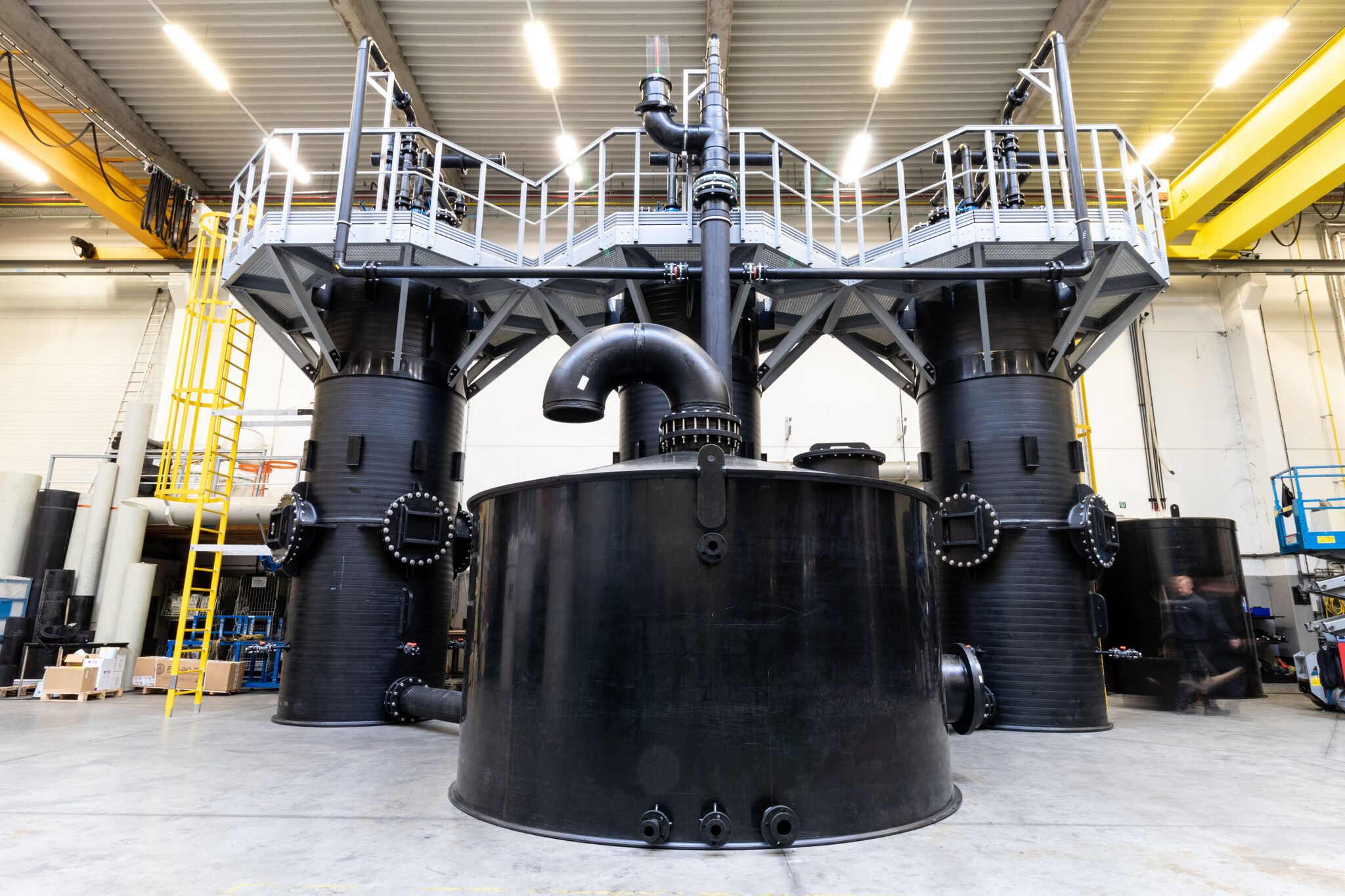
The Right Gas Scrubber for Your Process and Emission Requirements
Our engineers begin with a thorough analysis of your process and gas flow. Based on this, we select the most suitable gas scrubbing system. This ensures the gas scrubber is optimally designed for actual operating conditions and to achieve the required removal efficiency.
More info
Why choose CGK Group?
A reliable gas scrubber requires more than just the right installation. The exhaust system, material selection, piping, liquid distribution, process control, and safe integration must all be properly coordinated.
CGK Group guides you through the entire process: from analysis and engineering to in-house manufacturing, installation, automation, and service. You’ll have a single point of contact for your entire gas scrubbing system, tailored to your process and the practical conditions at your site.
Discover our approach, from engineering to maintenanceDiscuss your gas stream with our engineers
Are you experiencing issues with acidic fumes, ammonia, odor nuisance, or other harmful emissions? Or are you unsure whether your current gas scrubber still meets process and emission requirements?
If possible,please provide us with the following information: the type of process or emission source, the substances that need to be removed, the concentrations present, the normal and maximum gas flow rates, the temperature, the desired emission limit, and details about the existing system.
Frequently asked questions: Gas Scrubbers: Operation, Applications, and Regulations
Een gaswasser is vooral geschikt voor stoffen die goed kunnen worden opgenomen in water of in een specifieke chemische wasvloeistof. Voorbeelden zijn HCl, HF, SO₂, ammoniak, H₂S en bepaalde geurcomponenten. De haalbaarheid en het rendement moeten per gasmengsel worden beoordeeld.
Dat is mogelijk wanneer de stoffen onder vergelijkbare procescondities kunnen worden opgenomen of behandeld. Bij sterk verschillende chemische eigenschappen is meestal een meertrapsinstallatie nodig.
Dat gebeurt op basis van de stofeigenschappen, concentraties, gasdebieten, temperatuur, vochtigheid, piekbelasting, gewenste emissiewaarde, beschikbare ruimte en bedrijfsvoering.
Het verbruik hangt sterk af van het type en de belasting. Een doorstroomsysteem gebruikt continu vers water wanneer het actief is. Bij een circulatiesysteem wordt de wasvloeistof hergebruikt en alleen gecontroleerd gespuid en aangevuld.
Voor zure gassen wordt vaak een alkalische wasvloeistof gebruikt. Voor ammoniak of andere basische componenten kan een zure wasvloeistof worden toegepast. Voor bepaalde geur- en zwavelverbindingen kan een oxidatieve behandeling nodig zijn. De exacte productkeuze vereist een chemische en veiligheidskundige beoordeling.
Ja. We kunnen de gaswasser combineren met afzuigpunten, kappen, collectoren, luchtkanalen, kunststofventilatoren, leidingwerk en de benodigde regeling.
Ja. We onderzoeken bestaande installaties en adviseren over aanpassingen aan pakking, sproeiers, pompen, ventilatoren, meet- en regeltechniek, dosering of het aantal wastrappen.
Dat is mogelijk. Daarbij moet rekening worden gehouden met windbelasting, fundering, vorst, isolatie, tracing, regenwater, onderhoudstoegang en de bescherming van instrumentatie.