
Gas scrubbers: operation & regulations
What is a gas scrubber?
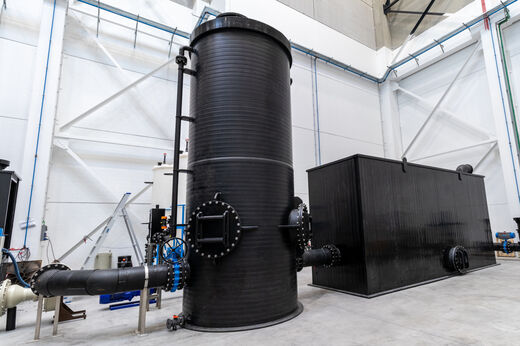
A gas scrubber, also known as a wet scrubber , is a purification system for harmful or nuisance gases and vapors. Substances such as hydrochloric acid (HCl), acetic acid, and ammonia (NH3) evaporate readily at ambient temperature and are harmful to people and the environment. A gas scrubber treats these vapors after they are vented via tank venting or an industrial process.
What substances and vapors can a gas scrubber treat?
Gas scrubbers are used, among other things, to treat:
- acidic vapors, such as HCl, HF, HNO₃, and SO₂;
- basic vapors, such as ammonia or NH₃;
- hydrogen sulfide (H₂S);
- odorous compounds;
- soluble organic compounds;
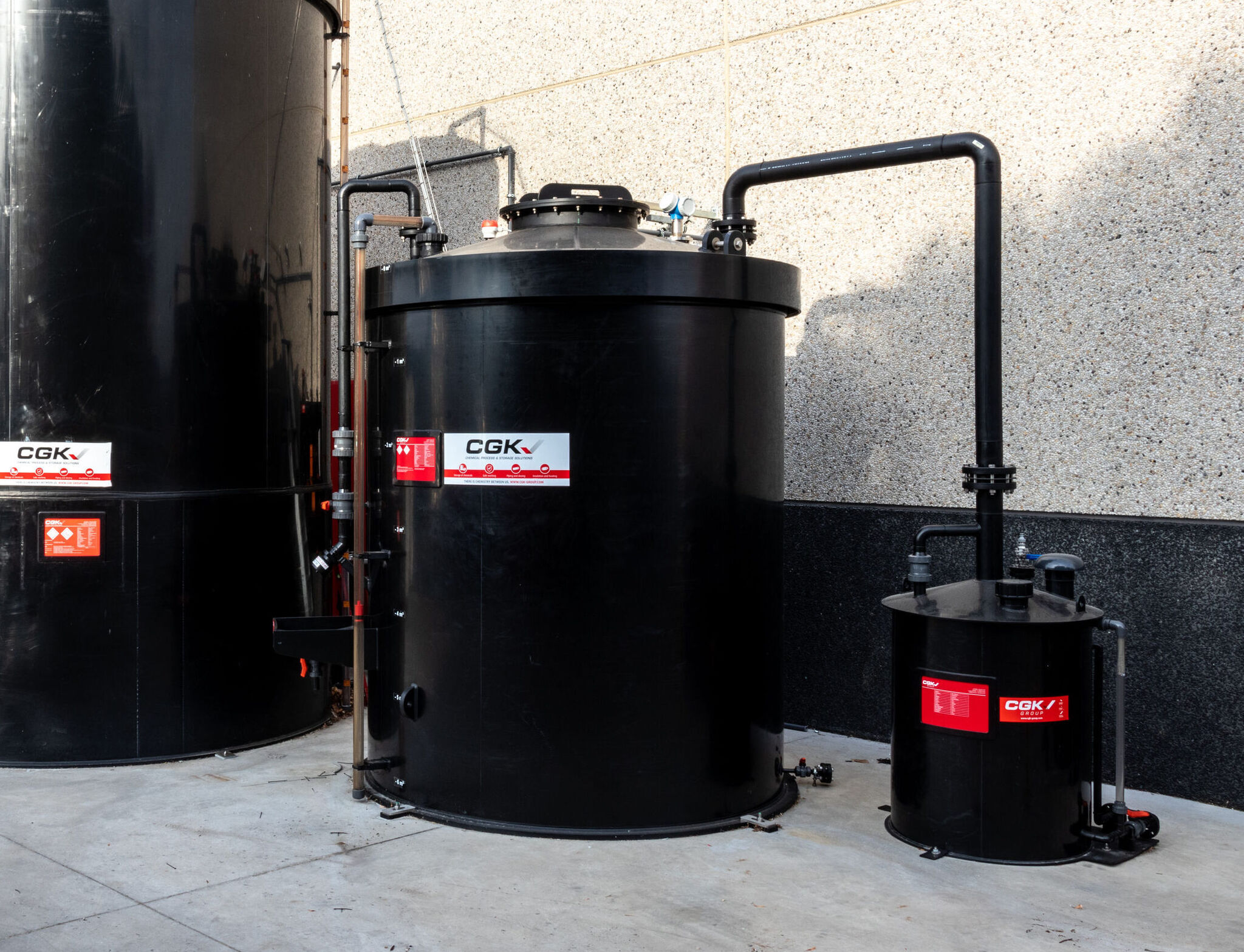
- vapors from chemical tanks;
- process air from chemical and industrial facilities;
- dust-laden air, when a wet dust removal method is suitable.
How does a gas scrubber work?
A gas scrubber brings contaminated air or gas into intensive contact with a scrubbing liquid. In the process, the undesirable substances transfer from the gas phase to the liquid and are absorbed by the scrubbing liquid. This process is called absorption or gas scrubbing.
Depending on the application, the system uses:
- pure water
- an acidic or basic scrubbing solution
- an oxidative scrubbing liquid
The appropriate solution depends, among other factors, on the substances present, their concentration, the temperature and humidity of the gas stream, the desired removal efficiency, and the variability in the process.
Operation of a conventional packed gas scrubber
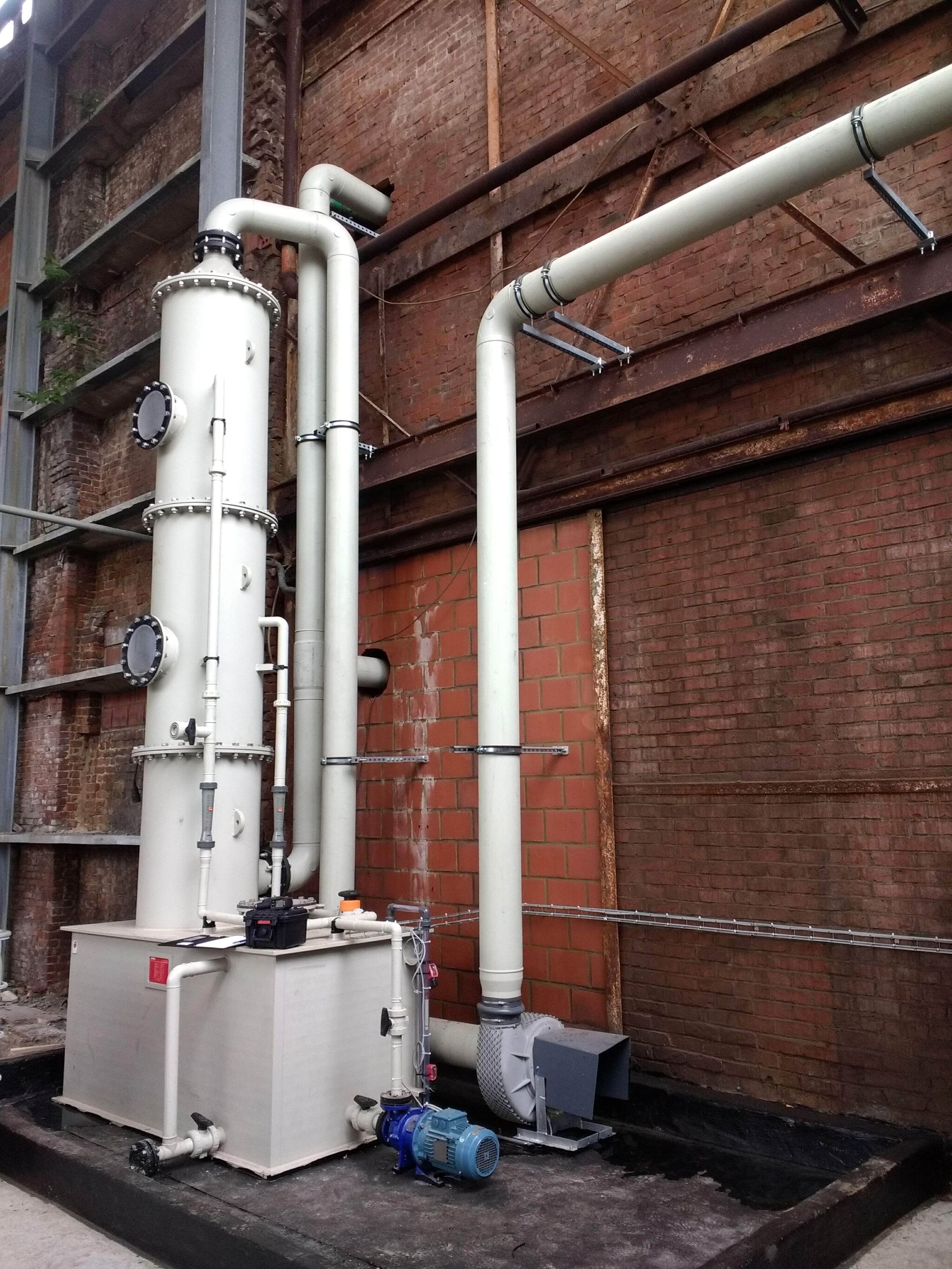
In a conventional packed gas scrubber—a column filled with packing material—this process occurs in several steps.
Collection of the contaminated air
The vapors are captured as close to the source as possible. They are then conveyed to the gas scrubber via pipes or air ducts.
Air Distribution
The gas is distributed evenly across the entire cross-section of the gas scrubber. This prevents any portion of the air from being inadequately treated.
Contact with the scrubbing liquid
The air flows through a zone containing special packing material. The scrubbing liquid is distributed over this material.
The packing material creates a large contact surface between the air and the liquid. The better this contact, the more efficient the gas scrubbing.
Absorption and Neutralization
The pollutants are absorbed by the scrubbing liquid. When water alone is insufficient, a suitable chemical is added.
This allows absorbed substances to be neutralized or chemically converted.
Droplet Separation
A droplet separator prevents fine droplets from being carried along with the treated air.
Process Monitoring
Depending on the installation, parameters such as pH, redox, conductivity, level, flow rate, and pressure are monitored.
Drainage and Flushing
When the washwater becomes too heavily contaminated, a portion is drained and replaced or further treated.
Which model do you need?
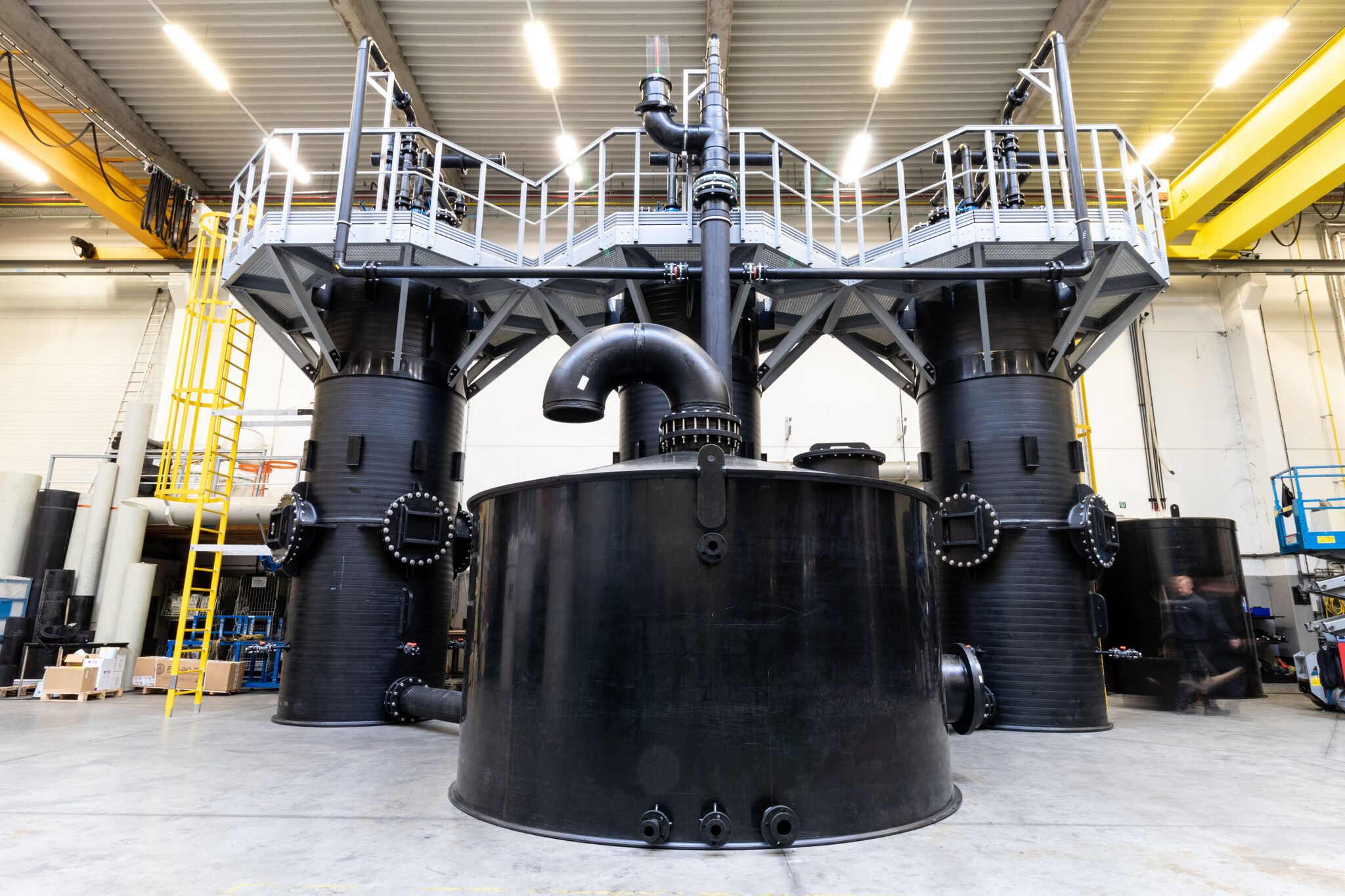
CGK Group manufactures various types of gas scrubbers:
When choosing the right gas scrubber, you must take several crucial factors into account to ensure that the air is completely stripped of harmful vapors. Based on an in-depth analysis, we’ll install the most suitable gas scrubbing system for you.
- passive gas scrubbers for limited vapor flows; active gas scrubbers with fresh wash water; active gas scrubbers with recirculation;
- vertical and horizontal scrubbers;
- multi-stage or single-stage gas scrubbers;
- compact scrubbers for chemical tanks;
- combinations with vapor filters, activated carbon filters, or biofilters.
Gas Scrubbers and Regulations: When Is a Gas Scrubber Required?
The need for a gas scrubber depends, among other things, on the product’s toxicity and volatility , the ambient temperature, the vapor flow rate , and the applicable emission and permitting requirements.
Vapor pressure is a key parameter in this regard. It indicates how easily a product vaporizes at a given temperature. The higher the vapor pressure, the more vapors can be released during storage, processing, or tank filling.
According to VLAREM II (5.17.4.1.9), a gas scrubberis mandatoryfor certain storage facilities when the vapor pressure is 13.3 kPa or higher and the temperature is 35°C or higher. Products with high vapor pressure evaporate more quickly and therefore often require a gas scrubber to control emissions.
Another important factor is the relative density of the saturated vapor-air mixture at 20°C. When this ranges between 0.9 and 1.1, vapors can easily mix with air, making a gas scrubber strongly recommended to prevent dispersion into the environment.
Is the gas scrubber connected to the tank vent? If so, it is best to install a low- or high-pressure safety device on the tank.
Discuss your gas flow with our engineers
Are you experiencing issues with acidic vapors, ammonia, odor nuisance, or other harmful emissions? Or are you unsure whether your current gas scrubber still meets process and emission requirements?
If possible,please provide us with the following information: the type of process or emission source, the substances that need to be removed, the concentrations present, the normal and maximum gas flow rates, the temperature, the desired emission limit, and details about the existing system.
Frequently asked questions: Gas scrubbers: operation & regulations
Een gaswasser is vooral geschikt voor stoffen die goed kunnen worden opgenomen in water of in een specifieke chemische wasvloeistof. Voorbeelden zijn HCl, HF, SO₂, ammoniak, H₂S en bepaalde geurcomponenten. De haalbaarheid en het rendement moeten per gasmengsel worden beoordeeld.
Dat is mogelijk wanneer de stoffen onder vergelijkbare procescondities kunnen worden opgenomen of behandeld. Bij sterk verschillende chemische eigenschappen is meestal een meertrapsinstallatie nodig.
Dat gebeurt op basis van de stofeigenschappen, concentraties, gasdebieten, temperatuur, vochtigheid, piekbelasting, gewenste emissiewaarde, beschikbare ruimte en bedrijfsvoering.
Het verbruik hangt sterk af van het type en de belasting. Een doorstroomsysteem gebruikt continu vers water wanneer het actief is. Bij een circulatiesysteem wordt de wasvloeistof hergebruikt en alleen gecontroleerd gespuid en aangevuld.
Voor zure gassen wordt vaak een alkalische wasvloeistof gebruikt. Voor ammoniak of andere basische componenten kan een zure wasvloeistof worden toegepast. Voor bepaalde geur- en zwavelverbindingen kan een oxidatieve behandeling nodig zijn. De exacte productkeuze vereist een chemische en veiligheidskundige beoordeling.
Ja. We kunnen de gaswasser combineren met afzuigpunten, kappen, collectoren, luchtkanalen, kunststofventilatoren, leidingwerk en de benodigde regeling.
Ja. We onderzoeken bestaande installaties en adviseren over aanpassingen aan pakking, sproeiers, pompen, ventilatoren, meet- en regeltechniek, dosering of het aantal wastrappen.
Dat is mogelijk. Daarbij moet rekening worden gehouden met windbelasting, fundering, vorst, isolatie, tracing, regenwater, onderhoudstoegang en de bescherming van instrumentatie.