Foam Tanks for Fire Protection Systems
Foam tanks are an important component of fire protection systems, such as sprinkler systems equipped with a foam suppression system. They ensure that sufficient fire-suppressing foam is always available when a sprinkler system is activated.
As a specialist in plastic tank construction, CGK designs and supplies custom foam tanks tailored to your fire protection project. Integration with pumps, piping, and the dosing system is carried out in collaboration with the sprinkler contractor.
When it comes to fire protection, reliability is key. The foam tank must be safe , integrate seamlessly into the system, and operate trouble-free for many years.
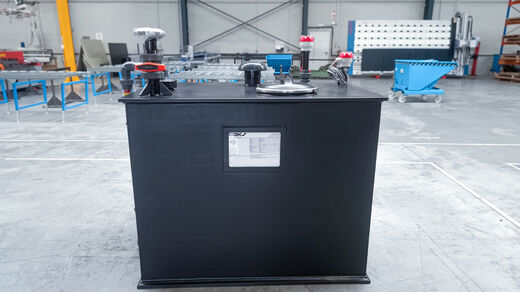
Custom Foam Tanks
Every fire protection system is different. That’s why we don’t use off-the-shelf solutions; instead, we custom - build foam tanks tailored to your project.
Depending on the available space and the application, the tanks can be rectangular or round . They are often installed inside utility containers or in a separate room near the sprinkler system.
Plastic Tanks with High Chemical Resistance
Foam concentrate is a chemical product with specific properties and therefore requires safe storage in a suitable, chemically resistant tank. CGK manufactures foam tanks made of plastic (PE) with high chemical resistance, ensuring that the foam concentrate can be stored reliably over the long term. Thanks to our experience in plastic tank manufacturing and our expertise in chemical storage, we supply durable foam tanks that are compatible with professional fire protection systems.
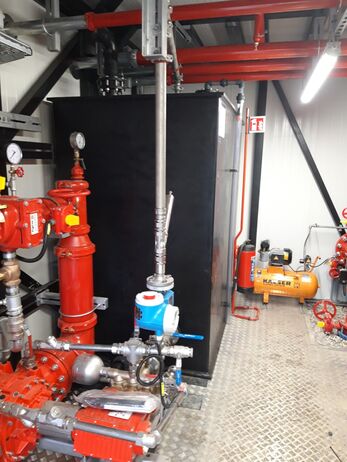
For sprinkler systems in businesses
Foam tanks are primarily used in fixed fire protection systems in industrial environments. Examples include facilities where fire safety is particularly important, such as manufacturing plants, warehouses, chemical plants, or other technical facilities.
In many cases, the foam tank is installed inside a technical container along with pumps, piping, and control systems. These containers are always placed outdoors for safety reasons.
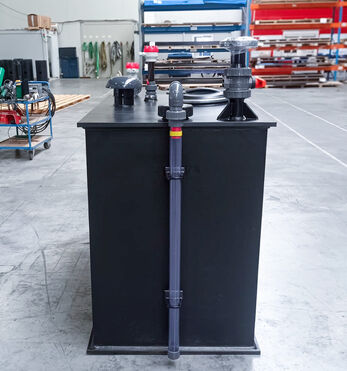
Advantages of Plastic Foam Tanks Over Bladder Tanks
Traditional bladder tanks have been used in fire suppression systems for many years. In these systems, the foam concentrate is stored in a rubber bladder inside a pressure vessel. Water pressure forces the foam from the bladder into the suppression system. While this system is reliable, it offers less flexibility in terms of design, maintenance, and refilling. A plastic foam tank—for example, in combination with a modern dosing system such as FireDos—offers several practical advantages today.
Simpler storage concept without an internal bladder
A plastic foam tank contains no pressure vessel and no internal rubber bladder. The foam concentrate is stored directly in an atmospheric plastic tank. This makes storage simple, organized, and easy to maintain. There are fewer sensitive components that can wear out or leak, making the tank a robust solution for long-term storage of foam concentrate.
Easier to inspect and clean
A plastic tank can be designed for easy access, with the necessary inspection ports, connections, and features. This makes inspection, cleaning, and maintenance more straightforward. In a bladder tank, the foam concentrate is contained in an internal bladder, which can make inspecting the entire storage system more complex.
Suitable for viscous foam concentrates
Many modern foam concentrates are viscous or thick. This requires a tank and dosing system that can handle them effectively.
When combined with modern dosing systems, plastic foam tanks can be used for various types of foam concentrate, including viscous foam concentrates and modern fluorine-free firefighting foams / PFAS-free firefighting foams.
Ideal for integration into sprinkler containers
In industrial installations, foam tanks are often built into technical containers alongside pumps, piping, and control systems. Custom-made plastic tanks are well-suited for this purpose because they can be adapted to the available space and the container’s design.
This makes them an attractive option for fixed fire protection systems at industrial facilities, where the entire system must be designed to be compact and well-organized.
A future-oriented solution for precise foam dosing
Modern foam extinguishing systems increasingly use a separate foam tank and a dosing system that precisely mixes the foam concentrate with the extinguishing water. This allows the dosage to be adjusted to the actual flow rate in the system.
A plastic foam tank fits perfectly within this approach. Compared to traditional agitation tanks, it offers greater control over the mixing ratio and supports the reliable, precise operation of the fire protection system.
Want to have a foam tank designed?
Do you need a foam tank for a sprinkler system or fire protection system? CGK would be happy to work with you to find a customized solution.
Frequently asked questions: Foam Tanks for Fire Protection Systems
A foam tank safely stores foam concentrate within a fire protection system. When the system is activated, the foam concentrate is drawn from the tank by a pump and mixed with water in the correct ratio using an electronic mixer .
The foam is not formed until further down the system, when the mixture exits through the sprinkler head or foam head and comes into contact with air.
A bladder tank is a traditional system for storing and dispensing fire-suppressing foam. The foam concentrate is contained in a flexible rubber bag—known as a bladder—which is housed inside a pressure vessel . Water pressure forces the foam concentrate out of the bladder and into the fire suppression system.
Although this system is commonly used, it contains an internal component that must be regularly inspected for wear, damage, or leaks.
Foam tanks are primarily used in permanent industrial fire protection systems at businesses. Examples include manufacturing facilities, warehouses, chemical plants, logistics sites, and other industrial applications where fire safety is crucial.
Our foam tanks are made of plastic with high chemical resistance, such as PE100. This material is strong, durable, and suitable for the long-term storage of foaming agents.
Foam concentrate is a chemical product with specific properties. The tank must therefore be compatible with the stored product so that the foam concentrate can be stored safely and reliably.
Yes. Foaming agents are often thicker and more viscous than water. That is why the tank is designed so that the foam concentrate can be drawn in easily and reliably.
CGK combines experience in plastic tank manufacturing with expertise in chemical storage. As a result, we supply sustainable , custom-made foam tanks that are safe, reliable, and suitable for professional fire protection systems.