Fire-resistant seals for penetrations
Fire-resistant seals for penetrations prevent smoke, fire, and heat from spreading through openings around cables, pipes, or ventilation ducts. CGK ensures professional installation, tailored to the application, the substrate, and the required fire resistance.
The result is a durable and well-finished installation that complies with applicable regulations and contributes to the safety of people, buildings, and systems.
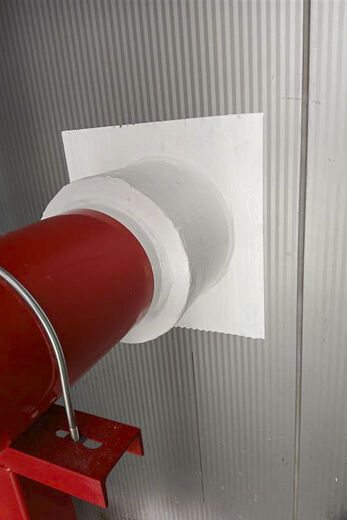
What are fire-resistant seals for penetrations?
Fire-resistant seals are special sealing systems designed to properly seal openings around service penetrations in fire-resistant walls and floors. They are used around, among other things, pipes for water, air, chemicals, or compressed air; plastic or metal pipes; cables; cable trays; ventilation ducts; process pipes; and pipes for utility services.
Why are they necessary?
When these systems pass through a fire-resistant wall or floor, the fire resistance of the wall or floor must not be compromised. Without proper sealing, smoke, fire, and heat can spread rapidly through these openings .
With the proper fire-resistant seal, the fire resistance of the wall or floor is restored, fire compartmentation remains intact, and the safety of people, buildings, and systems is further ensured.
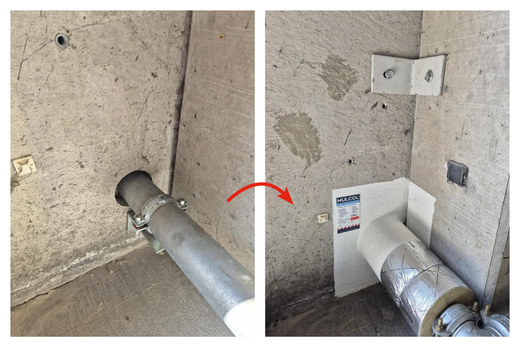
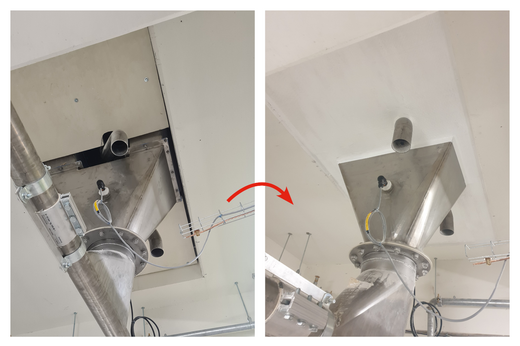
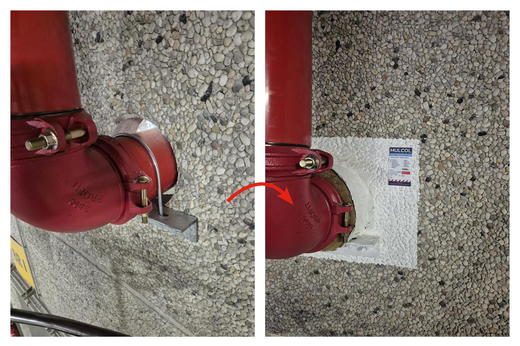
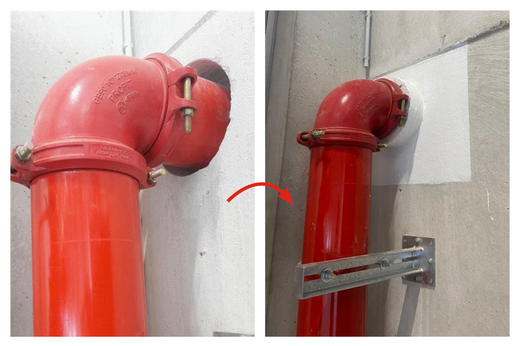
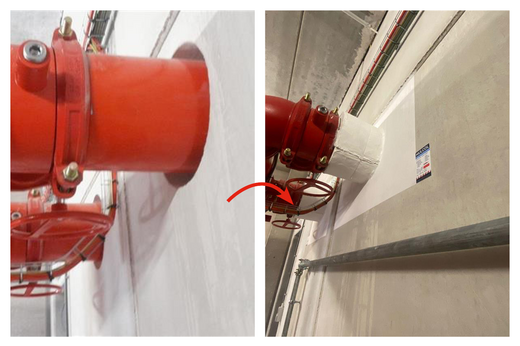
Our fire-resistant sealing systems
There is a customized fire-resistant solution for every penetration or opening. Depending on the type of installation, the size of the opening, and the required fire resistance , CGK implements the appropriate system.
When pipes or systems require not only fire protection but also thermal protection, we combine fire-resistant seals with insulation. In doing so, we take into account the required fire resistance, the technical installation, and the specific conditions of your project.
Fire-resistant paste
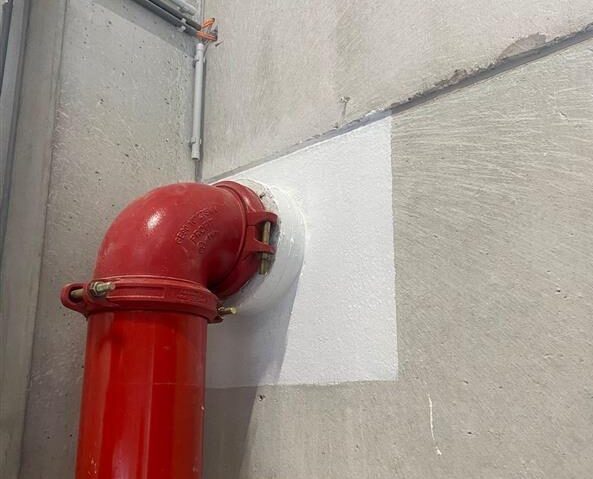
Fire-resistant paste or mortar is a durable solution for larger or more complex openings, service shafts, and penetrations in fire-resistant walls or floors. The paste provides a sturdy, fire-resistant seal with high resistance to fire, smoke, and heat.
This solution is often used around pipes, cable bundles, or combinations of various utility systems.
Fire-resistant collars
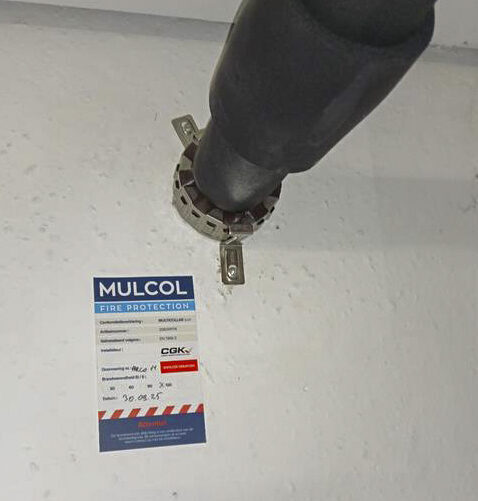
Fire-resistant collars are used with plastic pipes.
In the event of a fire, the plastic pipe melts away, while the intumescent material in the collar expands. This automatically seals the opening and prevents the spread of fire, smoke, and heat.
Fire collars are used in combination with a proper seal between the pipe and the wall or floor, such as fire-resistant sealant.
Fire-resistant sealant
For smaller penetrations, seams, and connections, we use certified fire-resistant sealant. This provides a smoke- and fire-resistant seal around cables, pipes, and connections.
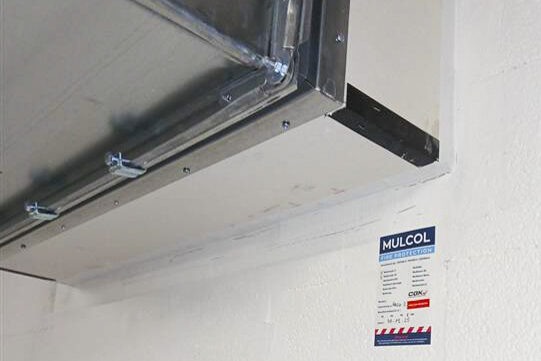
Fire-resistant coating
After installation, the entire system is neatly finished with a certified fire-resistant coating or paint. This white finish not only provides extra protection against smoke and fire, but also gives the installation a neat and professional appearance.
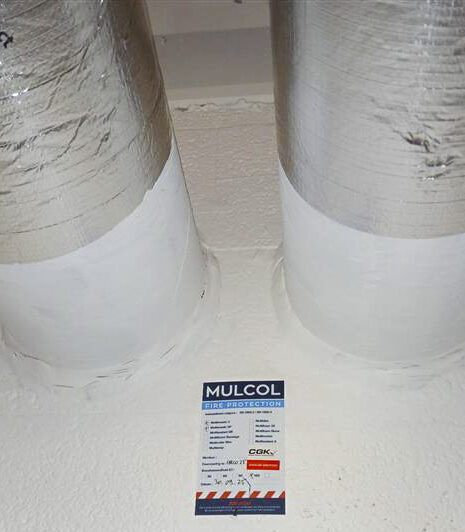
Implementation with identification and documentation
CGK installs every fire-rated opening in accordance with applicable regulations and provides the necessary identification and documentation. Upon completion, you will receive a well-organized project booklet containing all relevant information about the fire-rated openings installed.
This file includes, among other things:
- before-and-after photos
- an overview of the locations of the penetrations
- a description of the fire-resistant systems used
- technical data sheets and certificates for the products used
- any test reports and classification documents
- traceability of the work performed
This ensures you have a complete and verifiable record for internal quality monitoring, audits, inspections, and insurance purposes.
Get advice
Enter your information and get all the details you need.
Frequently asked questions: Fire-resistant seals for penetrations
A fire-resistant seal is required when cables, pipes, tubes, ducts, or other technical installations pass through a fire-resistant wall or floor, and the fire resistance of that wall or floor must be maintained.
The right solution depends on the application, the substrate, the type of penetration, and the required fire resistance for the project.
Yes. In many cases, existing penetrations can be retrofitted with proper fire-resistant seals. CGK conducts an on-site assessment to determine which systems are in place, which opening needs to be treated, and what level of fire resistance is required. Based on this assessment, the appropriate fire-resistant system is selected.
Fire-resistant paste or mortar is often used for larger or more complex openings. Fire-resistant sealant is suitable for smaller seams, joints, and penetrations. Fire-resistant coatings or paints provide a protective and neat finish. Fire-resistant collars are primarily used around plastic pipes and seal the opening when the plastic melts in a fire.
Yes. When pipes or systems require thermal protection in addition to fire protection, fire-resistant seals can be combined with insulation. In doing so, the required fire resistance, the technical installation, and the project conditions are taken into account.